Wednesday, May 7, 2008

Bonanza (part) Owner!

I did it. Forked over the check to become part owner of a 1966 Beechcraft Bonanza V35!

I guess the Bonanza has been the ultimate single engine private airplane in my mind for a long time. It all began in my childhood, I was all of 10 years old. My father was Flight Commander of 6 Squadron IAF in Poona (now Pune) India. 6 Squadron flew Lockheed Super Constellations modified as MR (Maritime Recon) aircraft and English Electric Canberra bombers tasked with an anti-shipping role. There a number of hangars at Pune, which were pretty large. The Super Connie's didn't fit in those hangars though the Canberras did.

In one corner of the hangar was a small dark blue single engine airplane, which my father told me was a "Beechcraft Bonanza". One Dr Bhave (pronounce "Bhaa-way") owned the aircraft and the IAF allowed him to store it in their hangars. Dr Bhave was a famous surgeon and used to fly the aircraft between Bombay (now Mumbai) and Poona. That journey would take 5 hours through the Western Ghats (a mountain chain) by road but was only an hour by the Bonanza. I heard from my father and his colleagues that Dr Bhave was an accomplished pilot and flew the Bonanza far and wide in all kinds of weather. I checked up on the Internet and found that it was an A-35 Bonanza. (For an explanation of the Bonanza models check out this Wikipedia article). It was registered "VT-CZE" in 1971. Dr Bhave had a number of Bonanzas, all of them A models. Private flying in India was very rare, and the handful of private citizens who flew their own aircraft were looked upon with awe. I remember my father telling me that I could own my own aircraft if I wanted. That seemed like a distant dream at the time!

The Bonanza I am a partner in is based in Renton. There are a total of six members - all of them long time part owners. Their partnership has had a number of airplanes. Most of the members have been associated with Boeing. In fact the member who was retiring was a well known aerodynamicist who had worked on the YC-14 (and even co-written a book on it). It has been hangared since it was bought - and this shows part of the gang in the hangar for the new member induction ceremony. Jay was fashionably late!


The members are all aviation enthusiasts, which is very important to me. They haven't been flying the aircraft as much as they would like but keep it in very good shape.

I saw the ad for the open membership at this years North West Aviation Conference and Trade Show. I wasn't going to pay it much attention but Amy pointed it out to me and I pocketed the number.

I am glad I called. I did my due diligence - joined the American Bonanza Society(ABS) and posted questions on the Beech Owners e-mail list. They gave me very sound advice. Avstar, a very well known Beech Bonanza specialist in the Puget Sound area, gave the aircraft a thumbs up. I also had the privilege of talking to Phyllis Baer, who used to be their CFI. Phyllis is a grand dame of aviation, still has her medical and flight instructors license at 83! I think I will fly with her as a thank you for her advice.

One of the selling points of the partnership was that Kent Curtis, the president, didn't try to sell the aircraft to me. In fact he was pointing out all the minor flaws rather than the more obvious assets of the Bonanza!

I met the entire partnership (except for Jerry who I met later) and they charmed both Amy and me. (Jay, the Mariners tickets helped but the humor did more!). They are obviously careful flyers and have a genuine affection for the airplane.

I am going to have to do an insurance checkout and I am looking forward to it. Heres to hours and hours of happy flying!

I hope to use the Bonanza to get more proficient in my flying. I will fly more (due to availability), fly it further (taking trips much further afield than I have) and use it for maintaining and enhancing my IFR skills. I will use the ABS's resources to get Bonanza specific in depth training including the highly regarded Bonanza Pilot Proficiency Program (BPPP).

>Thanks Dr Bhave and dad, for letting me dream. Living the dream is a great thing!

Saturday, May 3, 2008

Flying on autopilot ain't automatic!

Today I flew N97PD, a Cessna 172SP in BEFA's fleet, for the first time. I had originally started my IFR rating on N435SP, 97PD's sister ship in 2004. This time around I have flown most of my IFR sorties on the Cessna 182RG - but decided to go back to using the 172 SPs. This was mostly because of scheduling reasons - the 182RG is going to get a new set of avionics including a Garmin 480, which is significantly different from the KLN 94 I had been flying it with. I would have used the Cessna 182 straight leg for the rest of my training, but there is only one of those in the club. I needed something that had the proper avionics and of which there were at least two in the club - and that narrowed the choices down to the Cessna 172SP or the Piper Warriors. The 172SPs have a 180 hp engine and have better climb performance compared to the Warriors. Besides I was already checked out on the 172SPs. I had flown and checked out on the Piper Arrow, but not the Piper Warriors.

However 97PD has the King KAP 140 autopilot with heading and altitude hold. So, I needed to get familiar with it in IFR conditions. 435 SP has the same autopilot but without altitude hold. The KAP 140 is a very capable autopilot but has its' idiosyncracies. In an IFR environment an autopilot can reduce workload significantly, but if the pilot doesn't know how exactly the autopilot works it can increase workload at critical junctures.

I have used the KAP 140 before, in the Garmin 1000 suite equipped Cessna 182T for the Civil Air Patrol. However I haven't flown the 182T for a while and it was good to get a refresher. Howard has a presentation that he had prepared for the KAP 140 when 97PD was first acquired. It was also a refresher for the heading only autopilot in 435SP. I won't go into too much detail about the autopilot operation, but I will point you to a very nice succint description of it. This description is from the Flightgear wiki. Flightgear is an excellent open source flight simulator.

This is what I gathered from the briefing

1. The trim and autopilot need to be tested thoroughly - this is part of the procedure whether or not one intends to use the autopilot. There is a special trim switch and disconnect button. The trim switch is split and for the trim to move both switches have to moved. This is so that a short in one switch will not cause trim runaway.


2. There were a number of audio alerts for the autopilot. These included the following

  1. TRIM IN MOTION, TRIM IN MOTION… (pitch trim running for more than 5 sec)

  2. CHECK PITCH TRIM (out of trim condition for more than 15 seconds)

  3. ALTITUDE (1,000’ before)

  4. LEAVING ALTITUDE (200’ away)

  5. AUTOPILOT (AP has disengaged)

3. Both the HDG (heading) and the ALT (altitude) buttons are toggles. The HDG buttons toggles between ROLL (maintain zero rate of turn) and HDG (maintain the heading dialed on DG with the heading bug). The ALT button toggles between Altitude Hold (ALT) and Vertical Speed (VS) mode.

4. The ALT mode is confusing. Even if the altitude is armed (shown by an ARM indication) if there is no vertical speed up or down towards the altitude the autopilot will not hold that altitude. Once it reaches the altitude (after going up or down towards it) it will hold that altitude but the initial VS component has to be present.

5. The APR mode has a "standard entry" mode, which is a 45 degree intercept of any published leg that is dialed in on the DG and the CDI for NAV1. In order to do a standard entry one has to go from HDG mode to APR mode. An "all aspect entry" goes from your current position to intercepting any published leg that is dialed in on the DG and the CDI for NAV1 (at any angle). In order to do this kind of entry one has to go from ROL mode to APR mode. The procedure to do any kind of approach is to dial in the heading on the DG and then dial in the course on the CDI for NAV1. Then go from HDG to APR mode (if standard 45 intercept) or go to ROL mode then to APR mode (for any other type of intercept). The autopilot will not follow a procedure (as there is no GPSS steering) but will wait for you to dial in the heading and course in the DG and the CDI respectively for the next leg.

6. For any barometric pressure change the process is to change the pressure in 3 different places - altimeter, GPS and autopilot. The BARO key allows one to input the current altimeter setting into the autopilot

7. The autopilot holds altitude by using elevator and elevator trim. The power and yaw of the airplane need to be managed by the pilot. So if you are at idle power and have armed an altitude hold at an altitude, the autopilot will hold it for you - into the stall!

8. VS is the same way, power and yaw have to be managed by the pilot. When the autopilot is first put on, typically in the climb on takeoff, the default mode for it is ROL and VS. The VS is to whatever rate the aircraft is climbing when the autopilot is put on. So if you have a 1000 ft / min rate of climb, that rate will try to be held to whatever holding altitude you set on the ground. I don't know about you but my Cessna 172 doesn't hold that kind of rate of climb for very long - and it is possible that the autopilot will take it into the stall, unless rate of climb is adjusted using the up or down keys.

9. The big knob on the autopilot changes altitudes by a 1000 ft up or down and the small knob by a 100 ft increment. Just changing that value has no effect as explained in 4 above. The UP and DOWN buttons when in ALT hold will increase/decrease the altitude held by 20 ft increments and is useful when temporary pressure altitude changes need to be fixed.

10. On the ILS, once in APR mode, on capturing the glideslope a GS indication will come on and the autopilot will track the GS down to whatever altitude. The approach speed has to be maintained using power by the human pilot!

We carried out the entire flight from Renton to Paine Field and back on the autopilot. It certainly flys the airplane a lot better than me! We did the VOR/DME 16R into KPAE, a missed approach and then the ILS 16R into KPAE another missed and onto KRNT for the RNAV/GPS 15 for a circle to land 33.

One thing I learned is that the pilot has to be scanning continuosly and maintaining situtational awareness. The autopilot has so many modes and transitions that it is easy to get confused. One has to be able to take over control at any time and fly safely and correctly immediately. Fixation on the autopilot can be dangerous.

Sunday, April 27, 2008

Flying the Eagle again

I had planned to fly the Eagle this past Tuesday but the weather forecast was not conducive to me learning much. The winds at Renton are usually mild and one has to fly wide and far to find significant crosswinds sometimes. But not on Tuesday - clouds and ceilings were OK, but the winds were not. Renton is aligned pretty much North-South and the runs are 15-33 (variation is about 20 degrees in Pacific Northwest so 16-34 magnetic is the true north-south line). The winds were 070 at 11 kts, gusting to 16 kts! Pretty much a direct crosswind. Of course we called the flight off. Dave said with his characteristic understatement," You won't learn much (in these conditions)!"

So we rescheduled for Sunday. Both Rochelle and John were flying 16EE that day, because they are preparing to take the aircraft for aerobatic training camp to Ephrata. Another reason to squeeze a flight in, because if I didn't do it today I wouldn't be able to fly till May 5th.

I arrived to see Dave and John already there. I took a photograph with my phone camera. No, I didn't forget my Canon SureShot this time but Amy had the memory card out to transfer pictures!


That shows Dave and John making sure the Eagle is in fine fettle!

I was "behind the aircraft" this time. I made small mistakes like not taking the key before buckling in, and before that in the pre-flight I missed the altimeter and the g-meter. I also didn't check the fuel first, instead doing it just during the pre-flight. We already had fuel so there wasn't much of delay, but if we didn't we could have stood around waiting for the fuel truck to arrive.

I had some difficulty starting too, having to do two tries. Dave was letting me make mistakes and was not prompting me very much.

Taxiing wasn't bad - I was getting the feel for the "flat spot" at around 1000-1100 rpm that all IO-360s have due to a throttle linkage issue (according to Dave). If you blip the throttle too fast it will sputter at that RPM. It so happens that to get around turns or move from a stationary position you need exactly that RPM. Slow throttle movement around that point cures it but it takes some getting used to.

The first takeoff wasn't bad directionally, but I must have misread the speed because I thumped the tailwheel on the rotate. I also didn't keep situational awareness and turned towards the preceding traffic without sighting it. Dave wasn't too happy about that. We went towards Lake Sammamish, and I was asking Dave how high I should go. His reply was," How high do you think you should go?". We went to 3000 ft and were soon heading to the traffic pattern. The first landing was a straight in - and I didn't slow the aircraft down enough. I was behind the airplane again, and landed "hot". I usually know I did that because the mains touch down before I have had the stick fully back. We did a couple of bounces but I was able to pull the stick back fully and smooth them out. Directional control wasn't too bad though I could feel Dave's input through the rudder pedals. We taxiied back to the runaway and went again.

At takeoff this time I got caught by the crosswind and the airplane veered to the left just as we rotated, but I was able to bring it back and then bank to keep runway direction. Dave commented - "Looks like the crosswind got you, but you corrected it". Of course as soon as he said that I shot through the traffic pattern altitude. Dave, being from the old Air Force school of thought, is very strict about sticking altitudes. I had to guesstimate the attitude to fly, because the aircraft doesn't have a rate of climb indicator to show when it wasn't climbing or descending. I was also guessing at the power setting. This time we had to follow a Bonanza on a long final. I turned in behind the Bonanza and made a straight in approach. My speed control was not the greatest but I made it over the fence at the right speed - this landing was also with some bounce but not as bad as before.

I decided to ask Dave to do the entire next traffic pattern to see how he handled the aircraft. I kept an eye on the speeds and the power settings he used. He was much more close in and used steeper banks around the pattern. He bounced the next landing too! The thing one I saw him do was not put the stick back fully immediately but wait for the aircraft to slow before he brought it back. He mentioned that he had landed hot and waited to bring the stick back so that it didn't balloon the aircraft. More about this later!

The next pattern was undisturbed, and I kept it close in. I was more a less on speed and this was the best landing I did so far. I did bounce a little, but put the stick right back at the right rate. I managed to avoid the swerves. Dave later told me I had done the landing all by myself without any help from him!

We decided to do one more. This time we were told to do a short approach by the tower. Dave said he could feel me get stiff on the rudder, because I was concerned about the other aircraft on final. The speed control was awry, I flared a little too fast and ballooned. I did the correct action for the balloon and let it settle again. When it did, we bounced and we were still fast. I pulled back on the stick bringing it to the back stop but did it too fast. Because of the excess energy, the aircraft got airborne again. After a couple of bounces it settled down. There was also some swerving involved.

We decided to call it quits after that landing!

The lessons I learned from this session were

1. Get your head in the game, this aircraft requires one's full attention since the workload goes sky high immediately. I now intend to arrive 10-15 minutes early, and just think about the flight. I will also be better prepared with speeds, power settings and check lists. I got 16EE's check list to copy and study today.

2. The aircraft is a pretty forgiving aircraft, it isn't the squirrelly beast of legend. I did some basic mistakes while landing and the aircraft didn't turn around and bite.

3. Basic airmanship wins. Keep your speeds and heights, don't get sloppy and the results are very good. I need to keep my focus on doing that.

4. I was getting better at the pressures required on the rudder. Practice does help.

5. Relax and have fun - when I get stiff on the controls, it doesn't turn out well!

IFR flying on 25th April and 26th April

On Friday I had the Cessna 182 straight leg. I had flown my first IFR cross country almost two weeks before. Weather and aircraft/instructor scheduling had conspired to keep me from training anytime before that. On Fridays I fly before work that is 8 am - 11 am. To top it off I had come back the previous night from the Bay Area after a trip.

Howard wants to keep me planning and doing IFR X-countries but decided I needed to brush up on my skills after the two week hiatus. We decided to do some NDB practice, since we hadn't done that for a while. Howard filed us to Shelton, WA (which is Sanderson field KSHN). He wanted me to do the NDB / GPS -A approach in to SHN from CARRO, with a hold, missed approach and then a full procedure NDB approach. Then we would come back into Renton using the NDB approach to 15 instead of the GPS approach that we usually fly back into Renton.

It was a nice warm day, with lots of puffy cumulus clouds at about 3000 - 4000 ft. That meant I was going to get actual time because the MEAs were in that region. It also meant lots of turbulence with the updrafts and downdrafts around the cumulus clouds.


I find using the ADF quite intuitive, more so than the VOR. The needle just points to the beacon and you have to turn to where the needle points! No TOs or FROMs there!

The procedure at SHN is an NDB-A approach, which means that it has a pretty steep descent profile. Howard warned me about this. The approach path is 4.62 degrees, and one has to descend from 2300 ft at CARRO to 1400 ft on the beacon which is the Final Approach Fix (FAF). Then the MDA is 900 ft for the Cessna 182. From the FAF to the airport is 2.2 nm which at the 100 kt approach speed means that to land one has lose 800 ft in a minute and 15 seconds.

I was not doing very well holding altitude in the turbulence. I was not looking at the attitude indicator enough, so that I couldn't fix the little diversions immediately. When I concentrated on altitude I lost direction and when I concentrated on direction I lost altitude. The corrections were coming in fast. I hadn't flown in turbulence for a while and 735LH trims right out in stable air. I was getting lazy!

I was able to land nicely from minimums tracking the NDB all the way in. Using the GPS to see the ground track is very helpful too. I was rusty on making corrections, and was focusing on just using the NDB. Howard pointed out that I should use ALL the help available to me, and advised me to use the GPS ground track all the time. Of course I forgot to start my timer, so if I hadn't landed I wouldn't have known when I hit the missed approach point, which was the airport threshold in this case.

This picture was taken by Howard on the landing from the approach.

I was good with the hold too - and didn't have too much trouble doing the hold. Howard pointed out how to use the 45 degree marks on the DG to visualize intercept angles - and this time I think it stuck. Those marks make it easy to see where I have to head for the outbound turn on the procedure turn based on the final course and also the inbound turn so that the final course intercept angle was correct.

I went missed on this approach. I was late in remembering to start the timer, but I subtracted the estimated 10 seconds that I was late from the 1:15 approach time for my ground speed and went missed at the right point. We then went to Renton for the NDB approach into 15.

Renton has an interesting NDB approach. The initial approach fix is NUGUE and it is a radar based waypoint. The waypoint does appear in the GPS, but only radar can legally fix your position on NUGUE. This meant that you essentially have to be vectored on to the course. HAKIM intersection is also radar fixed.

I was concentrating harder on my attitude keeping, starting to use the AI more. So my flight was more a less on course and altitude. Fighting turbulence for so long is fatiguing, and I think an autopilot is de riguer for flying any distance in weather. We tried the heading mode on 735 LHs autopilot. However the updrafts and downdrafts were frequent enough to not make it much use to follow a heading. Looking at the AI and flying it carefully was the best way to fly the correct heading and altitude.

This shows the cumulus I was going through - I got some actual instrument time.

I monitored the GPS and the needle and it all seemed to come together. The compass was off on 735 LH, however I was using the needles for navigation and adjusting the headings on the DG to whatever made sense. This seemed to work well.

Coming down to a landing, I got a little slow and did the famous 182 hop - need to keep sharp for the landing, the flight isn't done till the aircraft is tied down!

On Saturday afternoon, Howard decided that I should do a quick cross country to Hoquiam. Hoquiam (KHQM) is on the coast about 80 nm from Renton. I had the 182 RG this time, since someone had taken the straight leg 182 (735 LH) for an extended cross country. It is getting increasingly difficult to schedule airplanes at the time I want, since the weather is getting better and the fair weather flyers are coming out in droves. We had to make sure we got back in time since there was another person who had the airplane after us.

Howard wanted me to do the ILS or LOC/DME RWY 24 at HQM. This is kind of weird approach - the LOC minimums are lower than the ILS minimums. This is because the LOC keeps the airplane above an obstruction that protudes into the protected airspace for the ILS glideslope and the can subsequently keep the aircraft safely above terrain to a lower height. The ILS approach has to keep you above the obstacle to be safe and is hence higher.

I was flying a lot better but still not looking at the AI enough. I flew the ILS perfectly though, since the decision height was 750 ft and my ILS goes to hell in a handbasket only close to the ground! We did a circle to land and did a good landing at HQM to a stop and go. Climbing out of HQM we opened our flight plan back to Renton. We asked for the visual approach and I hand flew the aircraft to get some practice flying the right headings and courses.

I found that the 182RG burns fuel from the left tank first and gets progressively right wing heavy as the flight goes on. This requires a constant left pressure on the yoke that messes up precise flying - I cheated a bit by holding a little left rudder (which Howard said was OK to do).

I did well on the way back and had a good long landing at Renton.

Thursday, April 17, 2008

Circuits and Bumps in the Eagle

Yesterday (Wednesday 16th April), I drove to Renton airport after work. Dave was already at the aircraft hangar. He had replaced the fuel drains and done some other work with the airplane. I am reading Alan Cassidy's book "Better Aerobatics" which is supposed to be THE seminal book on flying aerobatics. He stated that one should be grateful to find small snags because this is a chance to fix them before they become big ones! Dave certainly follows that philosophy. That means the Eagle will always be in top shape.

This time I did the pre-flight unaided. It is simple really. We do have a checklist, but I think I was encouraged to memorize the checks and use the checklist as a guide for study and for backup.

One thing I messed up was on the ratchet belt. I didn't do the "two handed spring loaded catch hold" to lengthen the belt. The consequence was that I had to strap in, then get back out and do it under Dave's supervision. Here is a picture of the mechanism taken with my cellphone camera.

This time the start was easy - we had forgotten to have the mixture full in when operating the wobble pump to get a fuel flow indication last time. Another thing I learned was that when the engine is cold, the mixture can be full rich for the start. This is different from every other fuel injected engine I've started (including other IO-360s such as on the Cessna 172 SP and the IO-320 on the Citabria 7KCAB). There the standard procedure was to keep the mixture at idle cut-off and push it in quickly when the engine catches.

Dave said that we would go out to the practice area, do some turns to get the feel again the aircraft and then would head back to Renton for some landings. This seemed like a fine plan for me.

Taxiing was the usual S-turns. I was doing too much of the "S-ing" and Dave told me to "lazy out" the S-turns. More about this later.

The first takeoff wasn't too bad. I realized I could lift off at a much lower speed than I am used to in other aircraft. Rotate speed for a Cessna 182 is around 55 kts, whereas stall speed is 44 kts. The stall speed for the Eagle is 60 kts and one can start the rotate at that speed. With its' light weight and lots of power it is accelerating and gets to climb speed even when rotated at around its stall speed.

I was a little stiff on the controls and wasn't letting the aircraft fly itself. On Dave's prompting I released my death grip on the controls and started flying with a light touch. My turns and coordination became so much better! One reason for the grip on the controls was that I had climbed so quickly I almost busted into class B on the extended upwind (its at 3000 ft).

After steep turns, slow flight and a stall we headed back to Renton. This thing can book. At 24 square it was doing 165 kts easily.

The story on the landings was quite consistent. Doing the downwind at 120 kts, base at 100 and final at 90 kts (slowing to 85 kts over the threshold) mades my approaches look good to Dave. The round out and flare were at the right height. Somehow I had good height judgement without the forward view I am used to. I wasn't turning my head like Dave but I was looking from side to side to do that.

What I was also consistently doing was overcontrolling on the rudder. I needed to just think about the rudder. So even after a nice landing I was swerving all over the place. Dave asked me to slow down on my S-turns on taxiing so that I used the kinds of pressures I would use on the rollout. This would fix the forces in my mind and I wouldn't have the tendency to overcontrol. I need to develop some fast twitch muscles on my legs so that I can have fine motor control to the level desired!

Another thing I needed to correct was to get the stick back all the way. I was hitting the buckle of my seat belt with my wrist due to the way I was holding the stick, I had to do a "grip change" and have my wrist rotated to get the stick the last 2-3 inches back.

On takeoffs I was not putting the "stick all the way forward against the tach" like Dave wanted. I need to get a feel for the tail lifting and how to balance the rearward movement of the stick till the liftoff can begin.

On the last landing the sink rate was high and I didn't have the stick all the way back, so instead of landing slightly tail low as before I landed on the mains. I compounded the error by not having the stick fully back after touchdown. We did a nice couple of porpoises! Stick fully back cured it.

All in all a pretty exhilarating ride. I felt for the first time that in a pinch I could land the aircraft without major damage to it if I needed. Of course I need a lot more refinement before I am able to handle the landings with even normal finesse!

Sunday, April 13, 2008

This week's IFR training (11 and 12 April 2008)

I hadn't flown an IFR training sortie for close to a month (as stated in my previous blog) and was due for my first IFR X-country. I didn't want to do the planned cross country to Ellensburg (KELN) right off the bat without some practice on scanning and navigation under the hood first.

So on Friday, 11th April Howard suggested that we fly to Bellingham (KBLI) which is up near the Canadian border. He wanted me to do the ILS 16 approach there. He had already filed us to fly direct to the Paine VOR (PAE). I had done a lot of my training at KPAE where PAE is located, so it would be a gentle re-entry into under the hood single pilot IFR. He then had me flying ZAGIC-BEZOV-EGRET-ACORD-HUH (which is V-23) to BLI.

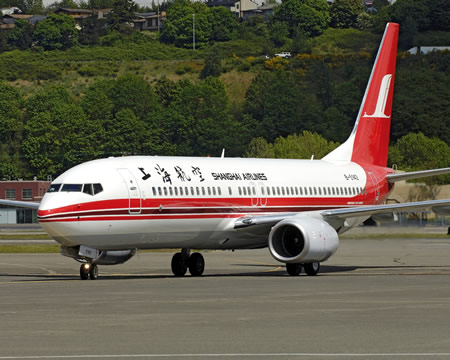
The first thing I learned was that the KLN-94 GPS does not have an airways routing option, you have to individually enter the waypoints. That took me a while! We launched off RWY 33, and since it took me so long to set up the GPS (and because we had to hold for the first flight of a Shanghai Airlines Boeing 737-800), the DG had precessed. I didn't check the DG as the last check before takeoff so the usual "turn right 350, climb to 3000 ft" departure procedure became a guessing game. Howard suggested I use the track on the GPS as a guide since the wind was calm and Seattle Approach would give me the right heading to follow (which I could estimate what heading I needed to show on the DG). This bothered my scan a little, but I managed to get the climb right. We had to climb to 6000 ft. MEAs around the Puget Sound are pretty high, this one was probably so that we could avoid the mountains south and east of KBLI.

The tracking on the airway wasn't bad though I didn't go exactly over PAE as Howard would have liked. I started preparing for the approach way ahead of time and was able to go over the checklist properly. This has usually been a problem - I really need to memorize what is required when and use the written checklist only as a backup. Not having all the checks done usually has me scrambling to set up things up while on the ILS or before intercepting the course inbound.

The ILS itself was easy - we were handed off to Victoria Terminal in Canada. The Canadian controllers sound pretty much the same as the US ones. No "ehs" and "aboots" here!

They do use different (more ICAO-ish?) terminology - "132 decimal 7" instead of "132 point 7" and "do not descend below 3000 ft" instead of "at or above 3000 ft".

My ILS approach was fine, I had to go to lower power than I am used to do 100 kts and 600 ft/min of descent to stay on the glideslope. This was because we had a slight tailwind. However close to the ground my direction control was wanting and I started making some big turns to stay on course. MUST REMEMBER TO DO SMALL CORRECTIONS. Minimums were 363 ft and Howard allowed me to take of my hood and land. We had to go to idle and full flaps to make the landing but we did make it!

I am sure a lot of people are aware of "Flightaware" which is a site that tracks airplanes on IFR flight plans and displays where they are live. It even stores the information and you can track your history by airplane tail number. My flight to KBLI was tracked and here is a graphic of it. Nice turn and intercept on to the ILS , if I say so myself!

We then did the KIENO TWO DEPARTURE PENN COVE TRANSITION from RWY 16 at KBLI. This involved climbing to 600 ft straight ahead and intercepting the 160 radial on the WHATCOM VOR (HUH) then from the KIENO intersection and on to CVV (Penn Cove VOR). This was my first DP (Departure Procedure) and the lesson I learned was to make sure all the avionics were set up and I had visualized what had to be done before even thinking about taking off. I had to monitor two VORs (for HUH and CVV) and the intersection on the GPS. How did people do this with just one VOR and an ADF in the old days?

To cut a long story short we did the RNAV GPS 16R approach into KPAE (Paine Field or Everett/Snonomish County airfield) and then did the RNAV (GPS) 15 approach back to Renton. (Everett is where the Boeing 747s and 777s are made) I did the checks and all right but again started making big corrections directionally. I went missed and on to Renton. This time I was anticipating the turns coming up on the GPS course and was able to do them a lot better than before, though I did not start down as early as I should have. We did a circle to land from 900 ft on Renton.

Howard said that I had an "encouraging" flight and what I needed to concentrate on was being disciplined in completing the check lists and being prepared at the right time on the approach. This would prevent distractions and would lessen the multi-tasking overload at critical moments.

I resolved to do just that for the X-country the next day. I had to go look at a Bonanza that I am planning to get a share in, so I did the planning early in the morning. The MEA going to KELN is 9000 ft! I hadn't been up to that height in a while. The course is pretty direct V2-298. Since the weather was CAVU, I didn't have to plan an alternate but I planned one anyway to KMWH.

The most interesting thing about KELN is that it is in a bowl in the mountains. The DP is critical for obstacle avoidance and is pretty interesting. DPs from airports like KELN should be read by VFR pilots as well, since they can be used to ensure good obstacle clerance in VFR conditions as well. Howard wanted to fly the VOR B approach into KELN.

Amy hadn't been on a flight with me for a while. Flying around in the soup while I had my hood on wasn't something that would be much fun! But this trip was perfect since the weather was awesome and she could get views of the mountains that are spectacular. She came along for the ride.

The things I learned this flight
  1. To shortcut IFR procedures you can say that you can maintain terrain clearance on your own and not have to climb in a hold. We were supposed to be at 9000 ft before crossing but were cleared to go direct to BANDR intersection (about 35 nm from Seattle) given 4000, 5000, 7000 and then 9000. The terminology the control used was "7000 maintain 9000".

  2. The aircraft power settings are very different at 9000 ft, even in a 230 hp Cessna 182, than they are at 3000 ft. I had reached "full throttle height" by 9000 and wasn't able to maintain top of the green on the manifold pressure above 8000. So we ran the prop at the top of the green to get some speed. Of course this causes the fuel consumption to go up, but we had plenty of fuel.

  3. You have to pay attention to beginning your descents and keeping within the confines of the approach. For the VOR B approach we had to complete the procedure turn within 7 nm of the VOR and had to descend from 9000 ft to 5700 ft in that time and then descend to 4300 ft before the Final Approach Fix for a minimums of 3260 ft.

  4. Circling in a hold after takeoff to an 8000 ft MEA (from a 1763 runway height) cannot be fun in a Cessna 172, we had to do 3 turns even in the 182.

This time my checklist discipline was better but I need to really go do stuff faster. I was also waiting for coaching from Howard - and he said that he is now going to stop talking to me (I hope he meant in the air!).

Amy took a picture of us "working". Howard is probably prompting me to set up the avionics right!


I did not see anything but the instruments and a glimpse of the runway on the VOR approach. The runway was off to the left and I did a circle to land. However here are the specatular views that Amy and Howard saw. Thats Mt Rainier off to my right. IFR flying is all well and good but missing these kinds of sights is not on!


Friday, April 11, 2008

Flying IFR after a month

Today I flew my first IFR sorties since March 15th. Thats almost a month after I had flown my last one.

It wasn't for lack of trying - I had tried on at least 3 different occasions to get in a flight. But cold days with ceilings at 2000-3000 ft had put paid to my flight ambitions.

Why couldn't you fly in the clouds you ask? What do you need for icing I reply!

Visible moisture and temperatures below freezing. Clouds fit the bill for visible moisture. And as for the temperature - it was 4 degrees Centigrade at the surface which is about 40F. But the temperature drops 2 degrees C for every 1000 ft. Do the math and at 2000 ft you'd hit the freezing level.

Why not below the clouds? After all 2000 ft is a decently high ceiling. Well the MEAs around this area are 4000 ft - which means the IFR system will put you at or above 4000 ft in the Puget Sound area. Some areas like Olympia and Tacoma Narrows may have lower IFR routes but the weather usually comes in from the South, and the ceilings there were around 1500 ft.

So I had to wait it out.

But today was a great day - clear no fog skies, only scattered patches of clouds and 60 F temperatures.

I was flying a Cessna 182Q Skylane N735LH from BEFA. I didn't have my camera with me so I took a photo of the airplane with my phone. My instructor is Howard Wolvington, one of the senior instructors (and a retired Boeing employee) who also owns a Comanche 250. A year or two back he got the award for making the furthest flight to the AOPA convention down somewhere in Florida and was featured in AOPA magazine. I really do need the best instructors I can get!

735 Lima Hotel is pretty well equipped. It has two NAV/COMs both with glideslope. It has a KLN94 approach certified GPS and a MFD that gives ground proximity alerts and is also a TIS (Traffic Information System). The autopilot is old and only the heading hold is working.

My usual airplane is N7568T - a Cessna 182RG. I did a lot of my IFR training on it with some notion of doing it in a more complex airplane. I have since decided that I want to have a simpler time on my checkride! It is amazing how much complexity just that one gear knob can add to your flight - otherwise the RG and Q are remarkably similar.


There's two of everything to remember - gear down climb speed, gear up climb speed, gear up approach configuration, gear down approach configuration. Having just one approach speed to worry about (we don't use flaps in the Cessna 182s in the approach configuration) is so much simpler! Not having to cope with trim changes when the gear is down versus when it is up simplifies life a little.

In my next blog, I'll write about the trip itself.